
Executive Summary & Index
Introduction: The Core Philosophy
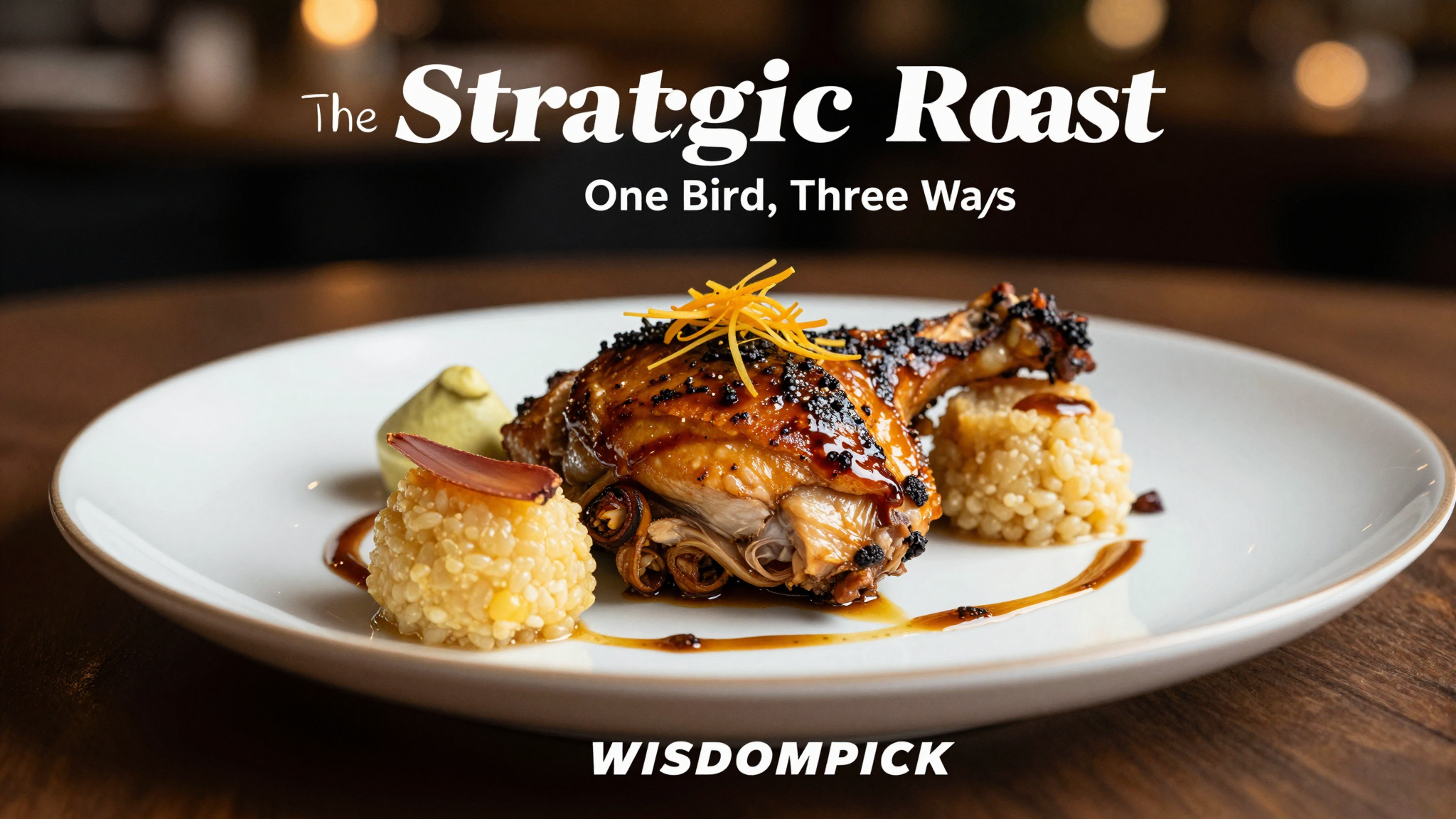
Beyond the Sunday staple, the humble roasted chicken emerges as a canvas for culinary mastery. This deep-dive explores the intricate science and nuanced artistry behind three distinct roasting methodologies, dissecting temperature profiles, browning mechanisms, and moisture retention. We move from the foundational 'Classic Confit-Roast' to the avant-garde 'High-Heat Sear & Slow' and the precision-engineered 'Sous-Vide Prime & Pan-Sear'. Each offers a unique textural and flavor dichotomy, a testament to the transformative power of controlled heat. We analyze global trends in poultry preparation, from traditional European techniques to modern gastronomic innovations, revealing how meticulous technique elevates a simple bird into a symphony of gastronomic delight. This isn't just cooking; it's an exploration of thermodynamic principles and biochemical reactions, orchestrated for unparalleled palatability. Prepare for an exhaustive technical examination.
The strategic application of thermal energy, understood through scientific principles, unlocks distinct textural and flavor profiles in roasted poultry. Each method, from patient confit-roasting to aggressive searing and precise sous-vide, represents a deliberate manipulation of heat transfer, chemical reactions, and moisture dynamics, culminating in a spectrum of culinary excellence.
The Alchemist's Embrace: Confit-Roast's Gentle Transformation
The 'Classic Confit-Roast' is a testament to patience and controlled thermal diffusion. Initiated typically with a low-temperature, long-duration pre-roast, often around 120-140°C (250-285°F), this phase prioritizes rendering intramuscular fat and breaking down connective tissues. The Maillard reaction, the cascade of chemical reactions between amino acids and reducing sugars responsible for browning and complex flavor development, is deliberately slowed, allowing for deep flavor infusion without premature charring. Crucially, the initial low heat minimizes evaporative moisture loss from the muscle fibers. The skin, initially protected from aggressive heat, becomes a vehicle for the subsequent high-heat phase. This phase, a brief but intense blast at 200-230°C (400-450°F), focuses on achieving epidermal crispness. The fat rendered during the low-heat stage acts as a thermal conductor, facilitating rapid browning and the development of desirable polycyclic aromatic hydrocarbons, contributing to the signature roast aroma. Moisture is strategically retained within the meat, resulting in a succulent, fork-tender interior juxtaposed with a shatteringly crisp skin – a textural triumph born from calculated thermal gradients and a mastery of browning kinetics.
Inferno's Kiss: High-Heat Sear & Slow's Fiery Ballet
The 'High-Heat Sear & Slow' approach inverts the conventional paradigm, commencing with an aggressive sear at 240-260°C (465-500°F). This initial blast triggers a rapid, almost instantaneous Maillard reaction across the entire surface of the bird. The high kinetic energy of the oven environment drives intense browning, locking in initial flavor compounds and creating a formidable crust. The challenge here lies in managing heat penetration to avoid overcooking the exterior before the interior reaches a safe and desirable temperature. Following the sear, the oven temperature is drastically reduced to 150-170°C (300-340°F) for a slower roasting phase. This transition is critical. The pre-formed crust acts as an insulating barrier, protecting the underlying meat from excessive moisture loss during the subsequent lower-temperature cook. Internal temperatures are monitored meticulously, aiming for a final resting temperature that allows residual heat to complete the cooking process. This method yields a robustly flavored bird with a pronounced, almost caramelized crust, albeit with a higher risk of uneven cooking if not expertly managed. The interplay of rapid surface thermogenesis and subsequent gentle cooking is key to its success.
Precision's Edge: Sous-Vide Prime & Pan-Sear's Molecular Blueprint
The 'Sous-Vide Prime & Pan-Sear' represents the apotheosis of controlled cooking, leveraging molecular gastronomy principles for unparalleled consistency. The chicken is meticulously seasoned, vacuum-sealed, and submerged in a precisely temperature-controlled water bath, typically between 63-74°C (145-165°F), depending on desired texture. This 'sous-vide' phase ensures uniform cooking throughout the muscle fibers, eliminating the risk of overcooked edges and undercooked centers. Protein denaturation and gelatinization occur predictably, resulting in an exceptionally tender and uniformly cooked interior. The key to this method's success lies in its predictability; the temperature is maintained below the point of significant moisture expulsion for extended periods. Once the sous-vide phase is complete, the bird undergoes a rapid, high-heat pan-sear, usually in a cast-iron skillet with clarified butter or high-smoke-point oil. This final searing phase, conducted at 230-250°C (450-480°F), is purely for epidermal browning and flavor development. The moisture content is already optimized, so the sear is swift and focused on creating a crisp, golden-brown exterior, culminating in a technologically advanced, texturally flawless roast.
Global Currents: A Comparative Geogastronomic Scan
Examining global trends reveals a fascinating divergence in roasting philosophies. Traditional European methods, exemplified by the French poularde rôtie, often emphasize a slower, more gentle roast, akin to our 'Confit-Roast,' prioritizing inherent flavor and moisture. Conversely, American barbecue traditions, while not always roasting whole birds, showcase a profound appreciation for high-heat searing and smoke infusion, echoing the principles of our 'High-Heat Sear & Slow.' The rise of molecular gastronomy and precision cooking techniques, particularly within haute cuisine establishments, has propelled methods like 'Sous-Vide Prime & Pan-Sear' into the mainstream, driven by a demand for predictable perfection and optimized textures. Furthermore, innovations in oven technology, including convection and steam injection systems, are increasingly influencing home and professional cooking, allowing for more controlled and reproducible results across all roasting styles. The strategic selection of bird breed, feed, and even slaughter age also plays a significant, often overlooked, role in the final outcome, influencing fat marbling and muscle structure, and thus, how effectively each roasting method can be applied.
Thermodynamic Synergies & Biochemical Symphony
At the heart of every successful roast lies an intricate dance of thermodynamics and biochemistry. The 'Confit-Roast' manipulates heat transfer to achieve slow fat rendering, a process governed by Fourier's Law of Heat Conduction, and minimal evaporative cooling. The subsequent high-heat phase capitalizes on rapid radiative and convective heat transfer for rapid surface browning. The 'High-Heat Sear & Slow' exploits the exothermic nature of the Maillard reaction and caramelization at high temperatures, followed by a gentler phase governed by thermal diffusion. 'Sous-Vide' operations are a direct application of the zeroth law of thermodynamics, ensuring thermal equilibrium, while the final sear mirrors the rapid surface transformations seen in other methods. The interplay of water activity (aw), protein denaturation temperatures, and fat melting points dictates the textural outcome. Understanding these fundamental scientific principles allows for deliberate control over the cooking process, transforming a raw ingredient into a culinary masterpiece through calculated application of heat and time.
The Strategic Verdict
Mastering the art of roasting a single bird transcends mere culinary skill, demanding a deep appreciation for scientific principles. The 'Classic Confit-Roast,' 'High-Heat Sear & Slow,' and 'Sous-Vide Prime & Pan-Sear' each offer a unique pathway to poultry perfection, catering to different palates and demanding varying levels of technical precision. Ultimately, the 'best' method is subjective, dictated by desired outcomes and available resources, but a comprehensive understanding of their underlying mechanics empowers chefs and home cooks alike to elevate their roasting game from good to truly extraordinary. This exploration underscores that even the most familiar dishes can be reimagined through rigorous scientific inquiry and artistic application.