
Executive Summary & Index
Introduction: The Core Philosophy
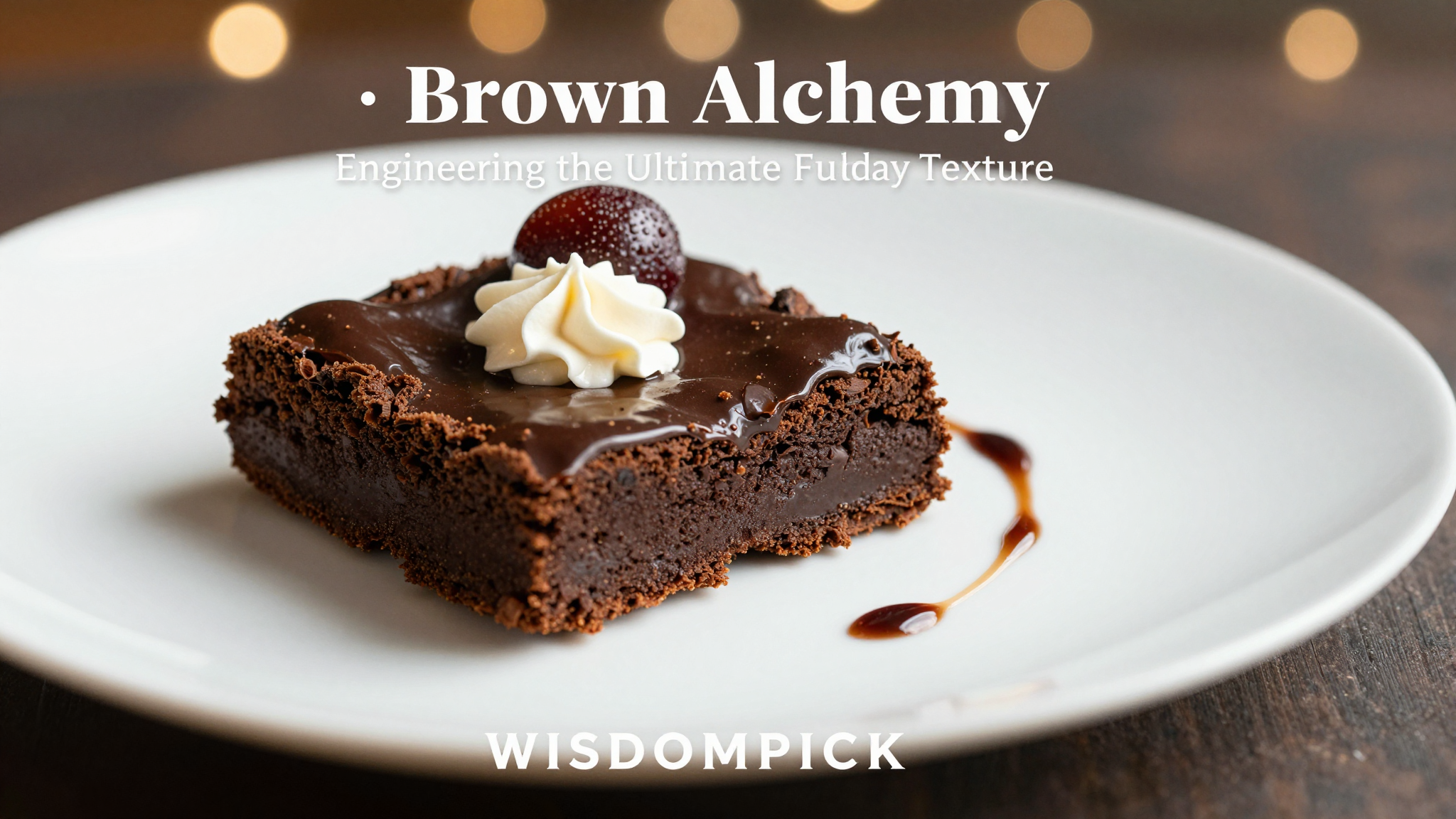
Beyond the realm of mere confectionery, the pursuit of the perfect fudgy brownie transcends simple baking. It’s a nuanced scientific endeavor, demanding an understanding of molecular interactions, thermal dynamics, and the delicate balance of ingredients. This deep dive explores the engineering principles behind achieving that coveted, dense, moist, and intensely chocolatey texture that defines a truly exceptional brownie. We dissect the critical components, from the role of fats and sugars to the impact of flour selection and leavening agents, offering an in-depth technical analysis for the discerning baker and food scientist alike.
The pursuit of the perfect fudgy brownie is a sophisticated exercise in controlling moisture, fat distribution, and protein coagulation. It's not simply about following a recipe but understanding the underlying chemical and physical transformations that occur. Global advancements in food science and baking technology are continually refining our ability to engineer specific textural outcomes, offering new avenues for achieving unparalleled fudginess.
The Lipid Luminary: Fat's Fundamental Footprint on Fudginess
The cornerstone of a fudgy brownie is its fat content. Butter, with its inherent water and milk solids, contributes both flavor and a tender crumb. However, for maximum fudginess, the ratio of saturated to unsaturated fats is paramount. Unhydrogenated oils, particularly those rich in monounsaturated fats like olive oil or certain canola varieties, inhibit gluten development by coating glutenin and gliadin proteins, thus preventing the formation of a strong, elastic network. This protein interference is crucial; it limits the structural integrity, preventing the brownie from becoming cakey. Furthermore, the melting point of the fat plays a critical role in mouthfeel. Fats with lower melting points, such as those found in vegetable shortening or refined coconut oil, contribute to a luxurious, melt-in-your-mouth sensation. The quantity of fat is also a direct determinant of density. Higher fat percentages translate to a richer, more viscous batter, which, upon baking, results in a less aerated, more compact structure characteristic of fudge. Global trends in fat selection lean towards optimizing flavor profiles while managing texture – think the subtle nuttiness of browned butter versus the neutral canvas of a high-quality vegetable oil.
Sugar's Sweet Sorcery: Beyond Sweetness to Structural Symphony
Sugar's role in a brownie extends far beyond mere palatability. It is a complex humectant and a potent denaturant of proteins. Hygroscopic by nature, sugars, particularly hygroscopic ones like brown sugar (due to its molasses content) and granulated sucrose, attract and retain moisture, directly contributing to the brownie's fudgy character and inhibiting staling. During the baking process, sugars undergo Maillard reactions and caramelization, contributing to color and complex flavor notes. More critically, however, is sugar's impact on egg proteins. High sugar concentrations interfere with the normal coagulation of egg proteins, preventing them from forming a rigid, cake-like structure. Instead, the proteins remain more pliable, contributing to the brownie's chewy and dense texture. The type of sugar matters significantly. Brown sugar, with its inherent acidity and molasses, also contributes to a slightly more tender crumb and a deeper flavor profile, often outperforming granulated sugar alone for fudginess. The ratio of sugars can also be manipulated; a higher ratio of brown sugar to granulated sugar generally yields a chewier, fudgier result.
The Flour Finesse: Minimizing Gluten, Maximizing Chew
The selection and manipulation of flour are central to controlling the texture of any baked good, and brownies are no exception. The objective for fudginess is to minimize gluten development. Gluten, the protein network formed when flour interacts with water, provides structure and elasticity. For a dense, fudgy brownie, a low-protein flour, such as cake flour or pastry flour, is often preferred. Alternatively, the amount of flour can be reduced relative to other ingredients, especially fats and sugars, thereby inherently limiting gluten formation. The method of incorporation is equally critical. Overmixing the batter after flour addition will activate gluten development, leading to a tougher, more cake-like texture. Gentle folding or minimal mixing ensures that the gluten network remains underdeveloped. The addition of cocoa powder, while contributing flavor, also acts as a dry ingredient and can absorb moisture, potentially impacting the flour-to-liquid ratio and thus gluten development. Some advanced techniques involve pre-hydrating flour or using heat-treated flour to further denature proteins and limit gluten’s contribution to structure.
Chocolate Chemistry: The Core of Cacao's Contribution
The quality and type of chocolate used are non-negotiable for the ultimate fudgy brownie. Dutched cocoa powder, alkalized to reduce its acidity, offers a smoother, less bitter flavor and a darker hue compared to natural cocoa powder. This reduction in acidity can also subtly influence the leavening process if baking soda is used. The fat content of the chocolate itself (cocoa butter) is a significant contributor to fudginess. Higher percentages of cocoa butter lead to a richer, more unctuous texture. When using solid chocolate, the melting point of the cocoa butter influences how the brownie behaves during and after baking. Unsweetened chocolate provides the purest form of cocoa flavor and allows for greater control over sweetness. The interaction between cocoa solids and other ingredients is complex; cocoa solids can absorb moisture, contributing to density, but they can also bind water, influencing the hydration of other components. Global trends are increasingly emphasizing single-origin chocolates and artisanal cocoa powders for their distinct flavor profiles and provenance, adding another layer of complexity to the fudgy brownie equation.
Thermal Transference: Baking as a Controlled Chemical Reaction
The baking process is where the engineered ingredients converge, and thermal dynamics dictate the final texture. Lower oven temperatures for extended periods promote more even cooking and allow for greater moisture retention, crucial for fudginess. This contrasts with the higher temperatures used for cake, which accelerate protein coagulation and moisture evaporation, resulting in a lighter structure. The Maillard reaction and caramelization, driven by heat, develop the desirable brown hues and complex flavors. However, overbaking is the cardinal sin in the pursuit of fudge. Overbaking leads to excessive moisture loss and over-coagulation of proteins, resulting in a dry, crumbly brownie. The 'doneness' test is therefore critical; the edges should be set, but the center should remain slightly underbaked, continuing to cook by residual heat. Global trends in baking technology are exploring precision ovens with advanced humidity and temperature controls to achieve a more consistent and predictable fudgy outcome, minimizing the margin for error inherent in traditional oven environments.
The Strategic Verdict
The ultimate fudgy brownie is a testament to precise engineering. By meticulously controlling the ratios and interactions of fat, sugar, flour, and chocolate, and by carefully orchestrating the thermal processes of baking, one can transcend mere baking and achieve a state of edible alchemy, yielding a texture that is both profoundly satisfying and technically brilliant.